By KELLY WALLACE, Think Turtle Conservation Initiative
Fishing has long been a favourite pastime across Ontario. It brings people together for food, good times, stories, and a meaningful connection to nature. For many, time spent on the water is part of family tradition and community life. Alongside that enjoyment, there has been growing awareness around one aspect of fishing that deserves a closer look. Lead-based gear has been widely used for generations, introduced at a time when far less was understood about its effects on aquatic wildlife, water bodies, and even potential human impacts.
The good news is that this is something anglers can help address. It begins with understanding how lead behaves in the environment and recognizing that safer alternatives are now available. Small changes in gear choices can make a meaningful difference in protecting loons and other wildlife while continuing to enjoy the fishing experience.
Loons and lead: A well-recognized concern
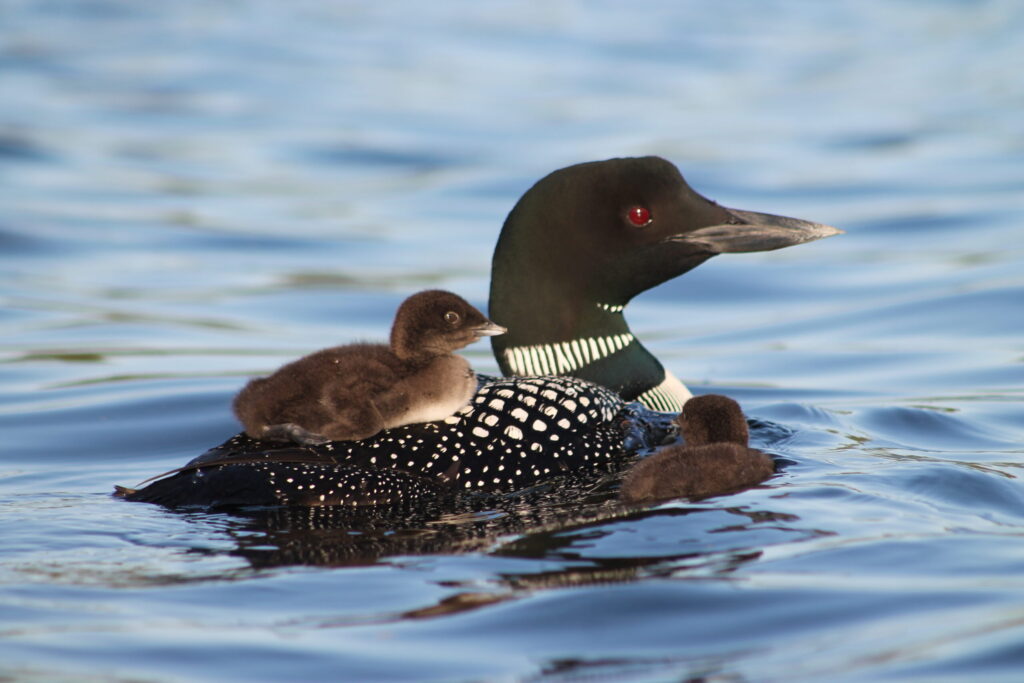
There has been growing awareness in recent years about the use of lead fishing gear, especially the very real and well-documented impacts on loons. Many people first hear about this issue through these stories, and understandably so. Loons are highly visible, deeply valued across Ontario, and particularly vulnerable because they can mistake small lead sinkers for grit or ingest them with fish.
In many regions, lead poisoning remains one of the leading causes of adult loon mortality. Even a single small piece of lead tackle can have serious consequences. This has helped bring attention to the broader issue of lead in our lakes.
Looking beyond loons: Turtles and other wildlife
What is becoming clearer over time is that the concern does not stop with loons. Lead that enters a lake does not simply disappear. Small pieces of lost tackle settle into sediments, where they can remain for long periods. As water conditions change, some of that lead can slowly break down and become available in the environment.
Turtles are part of that conversation. They are long-lived, slow to reproduce, and already facing a range of pressures across Ontario. Turtles can become hooked or entangled, and in some cases may swallow baited hooks or tackle. When that gear contains lead, there is potential for exposure inside the body. While this is not as widely studied or publicized as impacts on loons, it is a reasonable and growing concern, especially for species already at risk.
Other wildlife can also encounter lost gear. What begins as a small piece of tackle can become part of a much broader ecological story when it remains in the water.
The ripple effect in aquatic ecosystems
Lead that settles into lake bottoms does not remain isolated. It becomes part of the sediment layer where many small organisms live. These organisms form the base of the food chain. Over time, trace amounts of contaminants can move upward through aquatic systems, connecting sediments, invertebrates, fish, and wildlife.
This ripple effect is not always immediately visible, but it is important. Healthy lakes depend on balanced interactions at every level, from the smallest organisms to top predators. Reducing unnecessary sources of contamination helps support that balance.
What about fish and human consumption
Fish can be affected by contaminants in their environment, though often in more subtle ways than birds like loons. Lead in sediments can be taken up by small organisms and gradually move through the food web. In most cases, fish in Ontario remain safe to eat when people follow established consumption advisories based on regular monitoring.
For people who enjoy eating fish from local waters, the key message is one of care rather than alarm. Current guidance provides a safe framework, while efforts to reduce lead inputs help protect long-term water quality and fish health.
Why lead was used in the past
Lead became widely used in fishing gear for practical reasons. It is dense, inexpensive, easy to shape, and performs very well in the water. For generations, it was simply the standard material available, and anglers used what worked.
The shift we are seeing today reflects what science has gradually shown us about how lead behaves in the environment. As understanding has grown, so has interest in finding safer options.
Safer alternatives available today
Today, there are several effective alternatives to lead. Materials such as steel, tin, tungsten, and bismuth are now used to make sinkers and jigs. These options do not carry the same toxicity risks as lead.
Each material has its own characteristics. Steel is very stable and considered one of the lowest-risk options from an environmental perspective. Tin offers a good balance of affordability and performance. Tungsten is denser, enabling smaller, more sensitive gear. These alternatives are increasingly available and are being adopted more widely as awareness grows.
Responsible disposal and local options
Alongside switching materials, there is also the question of what to do with existing lead tackle. The most reliable option across Ontario is to bring it to a household hazardous waste depot, where it can be handled properly. Many communities, including those in North Hastings, hold designated collection days throughout the season.
In some areas, lake associations and conservation groups have begun organizing collection events or exchange programs. These initiatives make it easier for anglers to transition away from lead. While programs vary by location, they are gradually expanding as interest grows.
For more information on lead and its impacts, including the Together, Let's Get The Lead Out! initiative, you can visit fishleadfree.ca
Supporting healthy lakes and fishing experiences
Reducing the amount of lead entering lakes benefits more than just a single species. Healthier sediments support healthier invertebrates, which, in turn, support healthier fish populations. Cleaner systems are more resilient overall.
For anglers, this connects directly to the experience on the water. Strong, balanced ecosystems tend to support better fishing over time. Making small changes in gear choice can be part of maintaining that balance.
A shared stewardship approach
This is ultimately a shared stewardship issue. Anglers, lake users, and communities all care about the waters they spend time on. Moving away from lead does not require giving up the enjoyment of fishing. It is simply an adjustment based on what we have learned.
With accessible alternatives and responsible disposal options, it becomes a practical step that helps protect loons, turtles, fish, and the lakes themselves for the long term. Thank you to the anglers who have already made the switch to non-lead fishing gear. Thank you as well to those exploring alternatives and considering the change, and for the care and consideration that goes into every cast.
To contact the author, phone or text Think Turtle Conservation Initiative at 647-606-9537, e-mail thinkturtle@yahoo.com, visit the website at www.thinkturtle.ca, or follow us on Facebook.
Coming up on Tuesday, June 16, from 7 to 9 p.m., the Bancroft Field Naturalists will welcome guest speaker Matt Huras, who will speak about getting the lead out and the shift toward safer, non-lead fishing gear. The meeting will be held at Our Lady of Mercy Church, with the entrance located in the building beside the church. All are welcome to attend.