
Headline News
Municipalities don’t expect to run short of salt
January 29, 2026
By Bill Kilpatrick
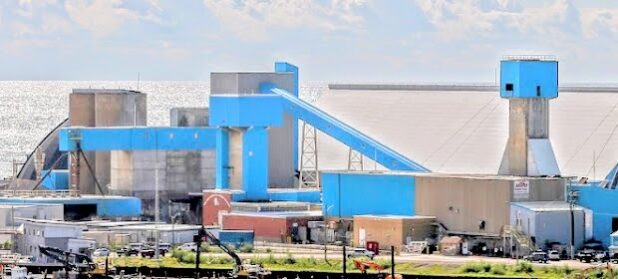
The last major road salt shortage occurred in 2018/19 and was the result of a strike by 350 Unifor Local 16-O members at the Compass Minerals salt mine in Goderich Ontario. The strike occurred over the summer months which led to a shortage the following winter. However, according to Draglam Salt, who describe them selves as “one of Ontario’s largest independent salt distributors,” this shortage is different. On their website they stated that “Ontario is experiencing a critical road salt shortage. Consistent weather events have required more frequent salt applications which have diminished bulk and bagged supplies in the local market.” The result, according to a Jan. 12 CBC News article, has been the prioritization of municipalities over private contractors. “Road salt shortages are forcing suppliers in the province to prioritize municipalities first, so anyone working with private contractors have had to source their supplies from out of province, such as from Quebec,” the article stated.
The result has been a limited supply for consumers and higher prices. Draglam Salt released a statement to their customers on their website on Jan. 18 warning them about the shortage and its expected impact. It stated, “We are doing everything possible to secure additional bulk salt from out-of-market sources, though this comes at higher costs. We know that product availability and pricing impact your operations, and we remain committed to keeping you informed and supported through these supply chain challenges. … As demand continues to rise, we will reassess logistics and supply to ensure we are doing everything we can to serve you.” A Jan. 20 CTV News article pointed out that some businesses are limiting the amount of ice melting salt available to customers.
Bancroft This Week spoke with Kyle Thomas, one of the owners of Bird’s Creek Farm Supply to see how the shortage is impacting businesses locally. Thomas said that they are definitely being impacted and can no longer get salt from their previous supplier Sika Canada located in Quebec. Thomas explained that they have had to resort to alternative ice melting compounds such as calcium, pickling salt, and Urea, which is a non-corrosive, chloride-free, and nitrogen-based solid fertilizer that is often used as an environmentally friendly, pet-safe alternative to salt for melting ice.
When asked about the response from customers, Thomas said “They’ve been really good. I haven’t had any complaints yet … they understand that we’re trying to do our best.” Thomas added that so far his costs for ice melting compounds have not gone up and unless they do he plans on keeping the price the same. “If my costs don’t go up then I’m not going to raise the price,” said Thomas.
Thomas did point out that many of the contractors that he supplied with road salt have been impacted and that they while there was an initial scramble he was able to provide substitutes. One of the issues was that some contacts state that a specific product must be used as a de-icer, but it is no longer available, leaving contractor’s worrying about fulfilling their contracts. “We’ve had to deviate bit to make due,” he explained. So far it seems that businesses and municipalities are understanding when it comes to contractors substituting de-icing products due to the lack of available resources.
Paul Walker, the operations manager at Bancroft Home Hardware, said that his store along with many of the big hardware chains have been hit with salt shortages. While he is happy to have some salt in stock now, he said that there was a couple of weeks when he had none. While Walker previously stocked Windsor salt, now he can only get King Salt, which is a product produced by Sika Canada, the salt supplier out of Quebec that previously supplied Birds Creek Farm Supply. But, unlike Birds Creek Farm Supply, who has been able to keep costs the same, Walker explained that the price of salt has gone up because of costs related to finding a new supplier.
Bancroft This Week examined Compass Minerals’ home page along with its Sifto Canada page and could not find a statement regarding the salt shortage from either organization. However, Syed Kazmi, vice-president of operations at Goderich Salt Mine, which is owned by Compass Minerals, told CBC News that “It’s the high demand that’s causing a lot more noise around than really what the capabilities are at Goderich mine … because we’re running at full capacity and we’ve got crews running seven days a week.” This means that there is no relief in sight for those who are struggling to keep salt in stock, especially if the weather continues to pose a challenge for road crews, contractors, and business owners alike.
The impact on municipalities in terms of salt price and availability seems to be varied throughout the province with some experiencing challenges due to the shortages, while others appear to be dealing with the shortage well. A CBC News article points out that Perth County and the City of Kitchener have experienced challenges, while closer to home The Corporation of the Town of Bancroft and Wollaston Township are weathering the shortage well.
Bancroft This Week reached out to all the local municipalities and the CAO of Hastings County, Connor Dorey, to find out how their road crews are coping with the shortage and received responses from Bancroft and Wollaston. In an email response, Andra Kauffeldt, the general manager for the Town of Bancroft, said that while their costs for salt have risen they anticipated the shortage in advance and “stockpiled twice the amount of salt” that they would normally purchase. Kauffeldt pointed out that their road operations have not been negatively impacted by the shortage and believes that Bancroft will have sufficient salt to get through the season.
Matt Kehoe, the public works manager for Wollaston Township, responded by email stating that “currently, our township has not experienced any service disruptions, and we continue to maintain safe winter road conditions.” Kehoe does not anticipate running out of salt as they are managing their salt supply due to “advanced planning, proactive ordering, and responsible use of materials,” combined with what Kehoe called “strategic application practices.”
Kehoe stated that so far Wollaston has not experienced any price increases for their salt, but he also recognized that could change if future supplies continue to dwindle. “Public safety remains our top priority,” stated Kehoe. “Our roads staff are using a measured, data-driven approach to winter maintenance to keep roads safe while responsibly managing resources.”
Local municipalities appear to be coping well, but that could change depending on mother nature’s plans.




Headline News
Faraday endorses proposed Alto high speed rail station in Madoc
By Bill Kilpatrick, reporter At their Feb. 4 council meeting, Faraday Township council endorsed the forthcoming Alto high speed rail corridor coming soon which will ...
Wollaston preliminary budget proposes 6.97 tax increase
By Bill Kilpatrick, reporter At the Feb. 10 meeting of Wollaston Council, the Treasurer Matt Walker presented the first draft of the 2026 Wollaston Township ...
Carlow Mayo holds Snowman Building Contest
By Michael Riley, Local Journalism Initiative Reporter The Carlow Recreation Committee launched a Snowman Building Contest on Feb. 7 that will run until Feb. 28. ...
Faraday agrees to TTCI request
By Michael Riley, Local Journalism Initiative Reporter At their meeting on Feb. 4, Faraday Township council heard from Kelly Wallace, executive director with the Think ...
Bancroft Boxing expanding programs for all ages
By Bill Kilpatrick When professional mixed martial arts fighter Cody Purtell opened Bancroft Boxing and Grappling in April of last year, he experienced a steep ...
Council votes to allow aerial spraying of herbicide in South Algonquin
By Nate Smelle South Algonquin Township council has reversed its earlier stance on aerial herbicide spraying, voting on Jan. 14 to allow the forestry industry ...
Bancroft awarded over $2 million for water infrastructure project
By Bill Kilpatrick On Jan. 28 MPP for Hastings—Lennox and Addington Ric Bresee announced that the Town of Bancroft was receiving $2,226,500 in provincial funding ...

Daughter reflects on father, Arne Roosman’s legacy of kindness and creativity
By Nate Smelle At 5:10 a.m. on Jan. 15, the world grew less colourful with the passing of beloved artist, storyteller, mentor, and community icon, ...

Home Again fundraisers help animals in need
By Nate Smelle Since it’s inception in 2009, Home Again Animal Rescue has relied on the generosity of the community generosity, and the determination of ...

Municipalities don’t expect to run short of salt
By Bill Kilpatrick The last major road salt shortage occurred in 2018/19 and was the result of a strike by 350 Unifor Local 16-O members ...


